Slate roofing in Leeds and Yorkshire
Natural slate re-roofs and repairs, from a few slipped slates to a whole new roof. Slate suits the older houses it was made for, and you deal with me from the first call to sign-off.
I reply to every enquiry within 1 hour, 7am–7pm.
Why slate roofs fail
Natural slate, much of it from North Wales, became the standard roof on Victorian houses across Yorkshire once the railways could bring it in.
Good slate lasts a very long time. The weak point is usually what holds it on. Older slates were fixed with iron nails, which rust through over the decades. When a nail fails, the slate slips. One or two slipped slates is a repair. When they start slipping all over the roof, it's known as nail sickness, and it means the fixings have reached the end of their life.
The battens can rot too. Some older slate roofs have no felt underneath at all, just mortar on the underside of the slates, which crumbles with age and lets in wind-driven rain. Worn lead valleys and flashings around chimneys are the other common causes of leaks.
Slate repairs
- Slipped or broken slates refixed or replaced, held in place with a small metal strip called a tingle
- Slates matched to the roof: new slate of the same type and size where possible, reclaimed where it isn't
- Valleys and leadwork repaired or renewed
- Ridge tiles re-bedded or dry fixed
A good repair matches the slate already on the roof in type, size and colour. The best match is often the roof's own slates, refixed. Where more are needed, new slate of the same type comes first, and reclaimed slate from a known source where new won't do. Lead around the stack is covered under chimney repairs.
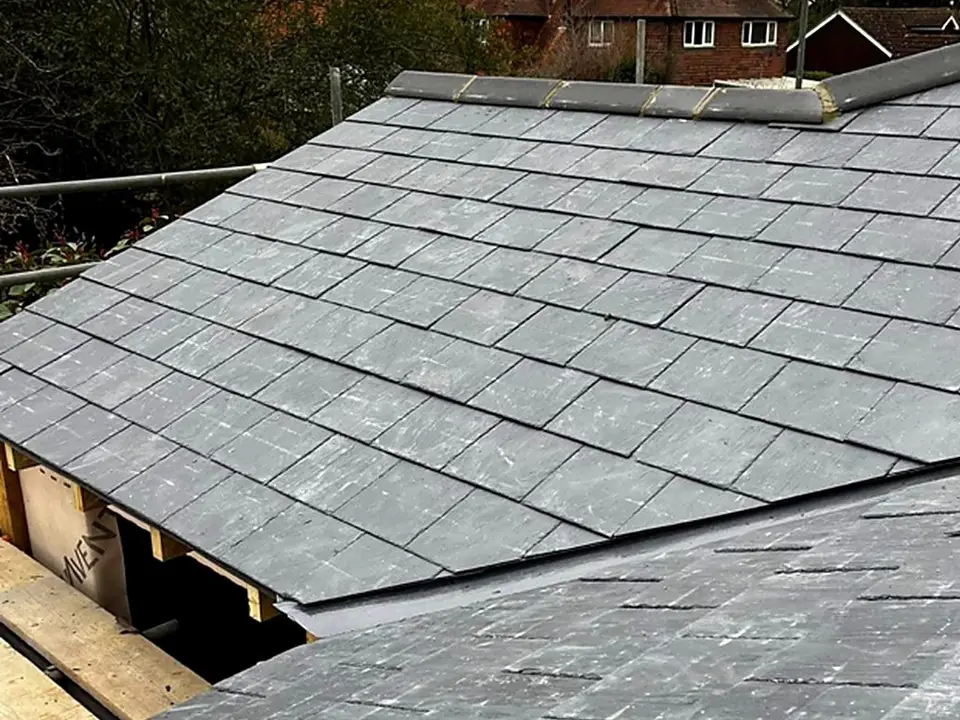
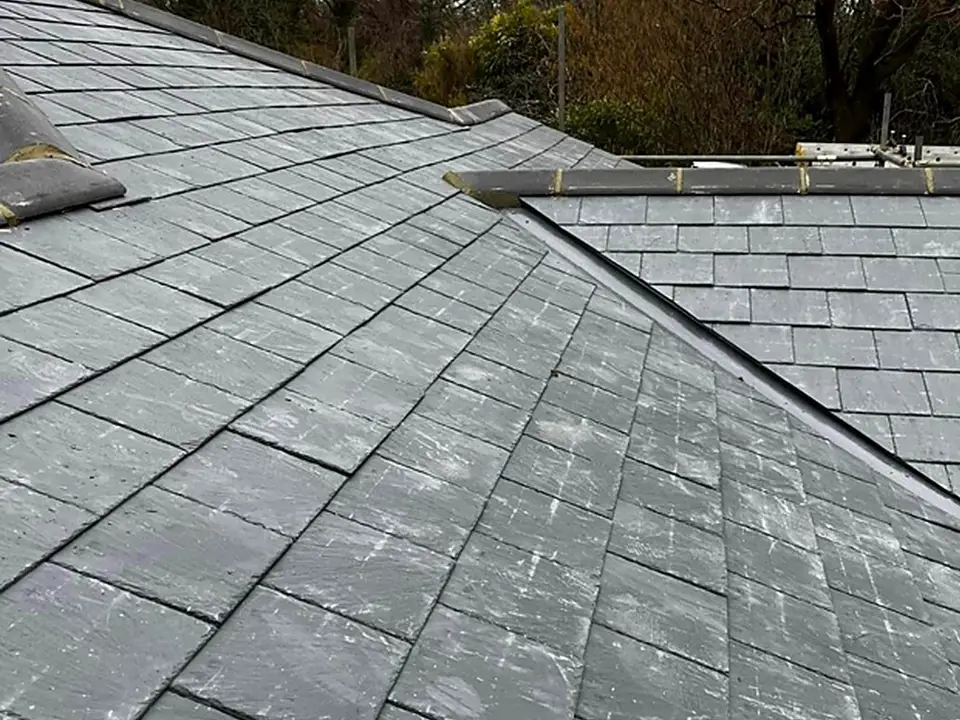
When a slate roof needs replacing
If slates are slipping across the whole roof, the battens have gone soft, or the roof has no underlay and lets in driven rain, repairs stop being good value. Conservation guidance puts the tipping point at around a fifth of the slates: once that many are failing, stripping and re-slating, reusing the sound slates, makes more sense than repair. A re-roof puts new membrane, battens and fixings under the slate, and gives the roof a long life ahead of it again.
If a repair will do the job, I'll tell you. You'll get a straight answer, and the reasons for it, before you spend anything.
What's included in a slate re-roof
Every roof is different, so your written quote lists exactly what's included. A natural slate re-roof usually covers:
- Scaffolding, where the job needs it
- Stripping the old slates, battens and any felt, and taking the waste away
- Checking the roof timbers, and talking to you before anything extra is done
- New breathable membrane and new treated battens
- New natural slate, with new fixings throughout
- Leadwork for valleys and chimneys where the roof needs it
- Ridge and hip tiles, mechanically fixed
- A tidy site and a final sign-off with me
If your house would suit concrete or clay tiles better, or you'd like to compare, see re-roofs.
The slate I use
For slate re-roofs, I use natural slate in the 500 × 250mm size, the metric version of the traditional 20 by 10 inch slate. It suits most pitched roofs, but not very shallow ones: the flatter or more exposed the roof, the more each slate has to overlap the ones below. I'll check your roof suits it when I quote, and if your house needs a different slate to match the street, tell me.
Listed buildings and conservation areas
Re-roofing a house in materials that look like the old ones doesn't normally need planning permission. That can change in a conservation area where the council has removed some of the usual rights with an Article 4 direction. On a listed building, any change that affects its character needs listed building consent. Replacing a few slipped slates with matching ones normally doesn't, but a change of slate, or a full re-roof, should be checked first.
If your house is listed or in a conservation area, check with your council's planning or conservation team before work is booked, and get the answer in writing. I'll tell you if I think it's worth asking.
One person from quote to sign-off
On a slate roof, the details matter. You deal with me throughout: I look at the roof properly, put the price in writing, keep you up to date while the work is done and sign it off with you at the end.
Slate roofing questions
Can my slate roof be repaired, or does it need replacing?
If only a few slates have slipped, a repair is usually fine. If they're slipping all over the roof, the nails have reached the end of their life and repairs stop being good value. I'll tell you which, and why.
Can you reuse my old slates?
Sometimes. If the slates themselves are sound, they can be taken off and re-laid with new fixings. If many are thin, cracked or flaking, new slate is the better choice. I'll tell you which when I've seen them.
Do I need Welsh slate?
Not usually. Welsh slate is what many older Yorkshire houses were built with, and it's still quarried in North Wales, but most natural slate used in the UK today is imported. On a listed building or in some conservation areas, the council may expect Welsh slate to be matched with Welsh, so it's worth checking before a re-roof. I'll talk you through it when I quote.
Can I swap slate for concrete tiles, or the other way round?
It's possible, but concrete tiles are heavier than slate, so the roof timbers need checking before a change. On a listed building or in some conservation areas, the council may expect slate to stay. I'll talk you through it honestly.
Free written quote, fixed price agreed before any work starts.
Tell me what's going on with your roof. I'll come out, look at it properly and put the price in writing.
I reply to every enquiry within 1 hour, 7am–7pm.