Ridge tile repointing in Leeds and Yorkshire
Loose, cracked or missing ridge and hip tiles, re-bedded, repointed or fixed with a dry ridge system. Done properly, so they stay put in the next storm, with one person to deal with throughout: me.
I reply to every enquiry within 1 hour, 7am–7pm.
Why ridge mortar fails
Ridge tiles run along the top of the roof, and hip tiles run down its sloping corners. On most older roofs they're held on by a bed of mortar, and that mortar takes more weather than any other part of the roof.
Over the years, the weather wears it away. Water gets into cracks, and frost can open them up further. Houses settle and move slightly over time, and rigid mortar can't move with them. And mortar that wasn't mixed or laid well in the first place fails sooner.
In the end the mortar comes away from the tiles, and they're held on by little more than their own weight. That's when storms start lifting them.
Signs your ridge needs attention
- Bits of mortar in the gutter, on a flat roof or on the ground below
- Ridge or hip tiles that look out of line, or move in the wind
- Gaps under the ridge tiles where you can see through to the felt
- A damp patch near the top of a ceiling, or in the loft along the ridge
- Ridge tiles on the ground after a storm
Ridge tiles are heavy. If one comes off, it can break the tiles below or hurt someone, so it's worth getting looked at before the next storm. If one has already come down and water is getting in, see emergency roof repairs.
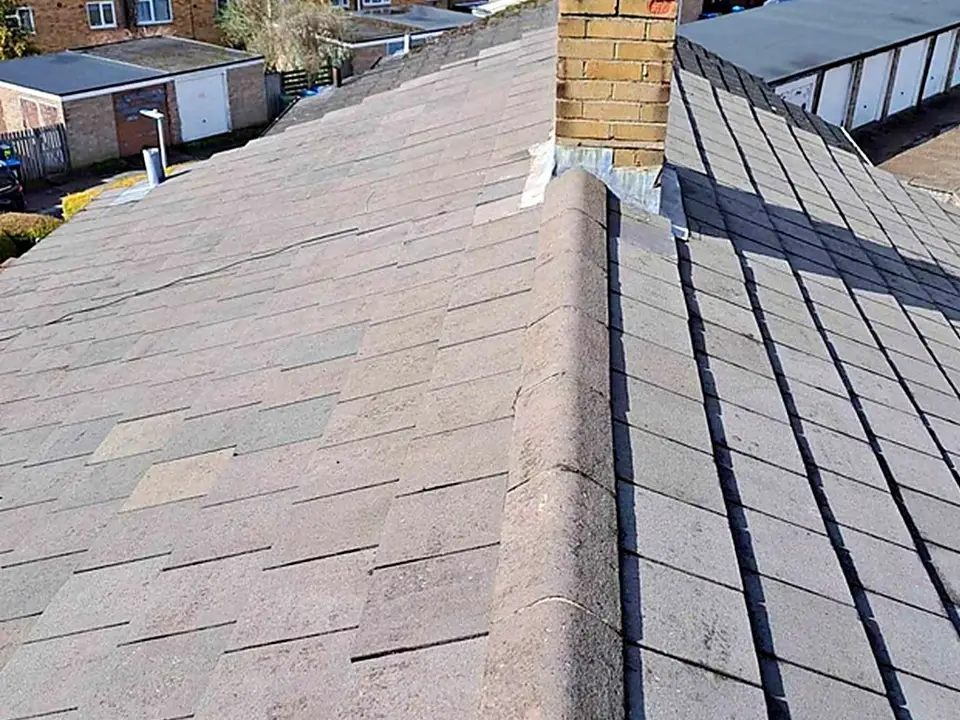
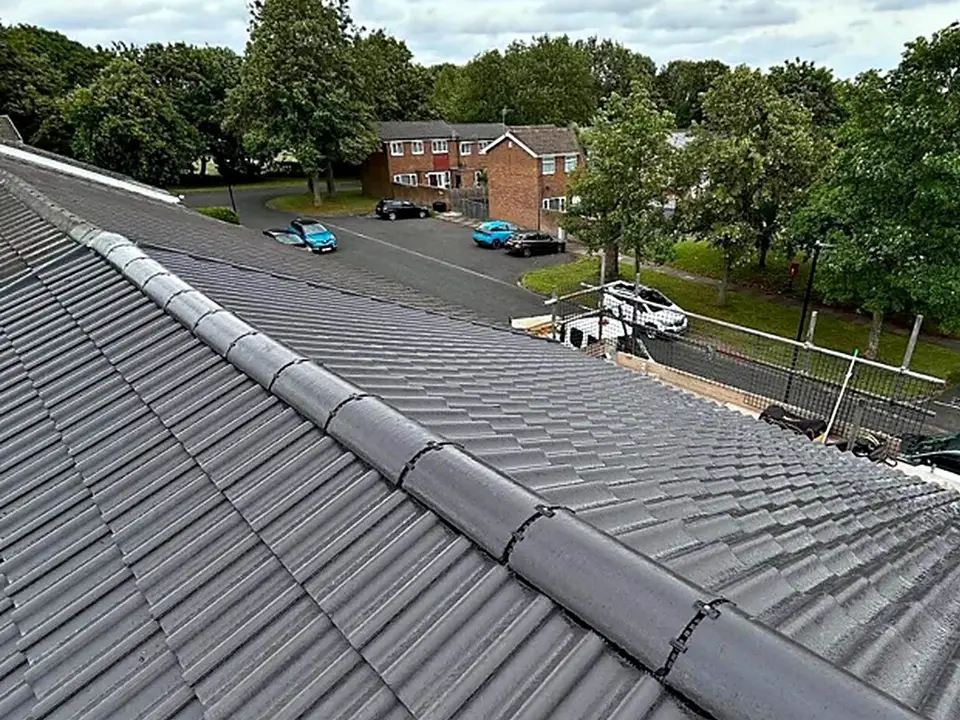
Repointing or re-bedding?
They're not the same job, and it matters which one your roof needs.
Repointing means raking out the loose mortar along the joints and edges and filling them with fresh mortar. It only works when the bed underneath is still sound and the tiles are firmly stuck to it.
Re-bedding means lifting the ridge tiles, cleaning off the old mortar and laying them again on a new bed, with mechanical fixings as well. It's the right repair when the tiles are loose or the bedding has broken up.
Repointing over failed bedding looks fine for a while, but the tiles are no more secure than they were before. If your ridge needs re-bedding, I'll tell you, and explain why.
Dry ridge systems
A dry ridge system does away with the mortar. Each ridge tile is screwed or clipped down over a strip of weatherproof material that seals the ridge and lets air move through the roof space.
There's no mortar to crack, so there's far less to go wrong, and the airflow helps keep condensation down in the loft.
Since 2015, the British Standard for slating and tiling, BS 5534, has said ridge and hip tiles should be mechanically fixed rather than held on by mortar alone, and since 2018 it has covered repairs as well as new roofs. Mortar can still be used, as long as there are mechanical fixings too. A dry ridge system is fixed that way by design, and should meet its own standard, BS 8612.
Dry ridge suits most concrete and clay tile roofs. On some older houses, a traditional mortar ridge is the better match for the roof and the street, and I'll talk you through the choice.
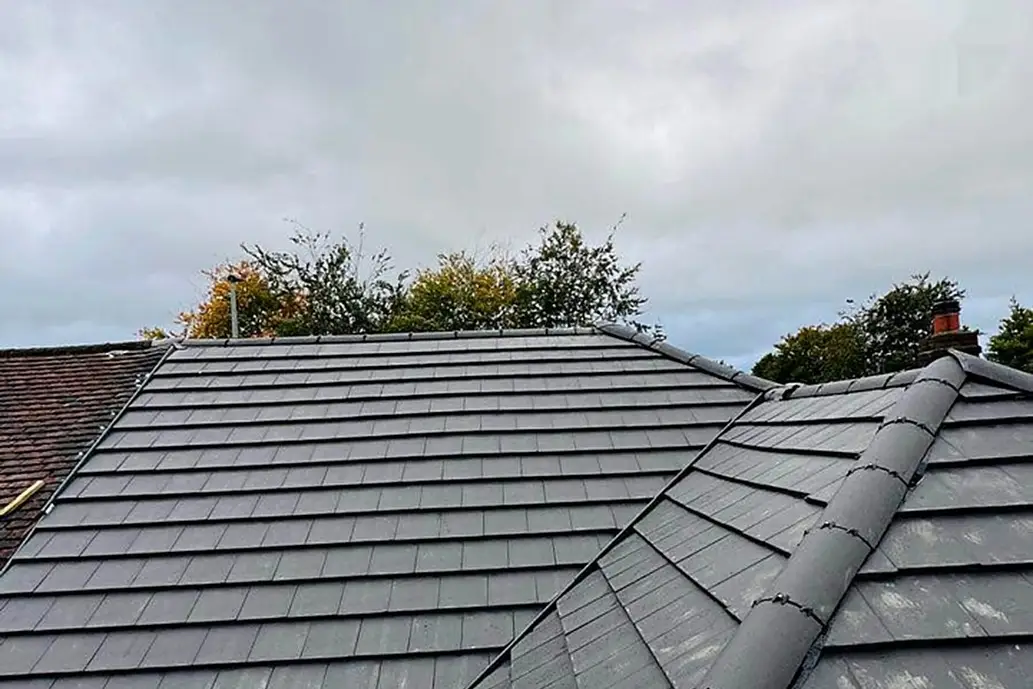
Hip tiles too
Hip tiles run down the corners of a hipped roof and fail in the same way as the ridge. Because they slope, a loose hip tile can slide. On a mortar-bedded hip, a metal hip iron at the foot stops the bottom tile sliding off. If it has rusted through, it's replaced.
What the work involves
Your written quote lists exactly what's included. Ridge work usually covers:
- Safe access to the ridge, which may mean scaffolding
- Lifting the old ridge and hip tiles, and cleaning or replacing any that are cracked
- New bedding with mechanical fixings, or a dry ridge system
- Securing the ends of the ridge and the foot of each hip
- Taking the old mortar away, so it doesn't end up in your gutters
- A final sign-off with me
Is it just the ridge?
When I'm up on the roof, I check the rest of it too. If tiles are slipping across the slopes or the flashing around the chimney has lifted, you'll know. Some of that is straightforward roof repairs, and loose flashing or a cracked stack is covered under chimney repairs.
If the whole roof is failing, re-bedding the ridge on its own won't be money well spent, and I'll say so. A re-roof might be the honest answer.
What a customer said
Roofhaus done an excellent job on our ridge tiles
Ricky Morrell
Ridge tile questions
Can you just repoint the gaps?
Only if the tiles are still firmly bedded. If they're loose, new mortar along the joints won't hold them, and they need lifting and re-bedding. I'll check them and tell you which your roof needs.
Is a dry ridge better than mortar?
It needs less looking after, because there's no mortar to crack. A mortar ridge with mechanical fixings is also sound, and can be the better look on some older houses. I'll recommend one and explain why.
Can you reuse my old ridge tiles?
Usually, if they're sound. Cracked or broken ones are replaced with the closest match I can find, and I'll show you the match before any work starts.
Do I need scaffolding for ridge work?
It depends on the height and shape of the roof and how the ridge can be reached safely. I'll tell you when I visit, and if the job needs it, it's included in your written quote.
Free written quote, fixed price agreed before any work starts.
Tell me what's going on with your roof. I'll come out, look at it properly and put the price in writing.
I reply to every enquiry within 1 hour, 7am–7pm.