Chimney repairs in Leeds and Yorkshire
Repointing, flaunching, lead flashing, capping and removal. When a chimney leaks, the cause is usually the pointing, the flaunching or the lead. I'll find which, explain it, and put the price in writing before any work starts.
I reply to every enquiry within 1 hour, 7am–7pm.
Why chimneys need looking after
A chimney stack stands above the roof, so it takes the wind, rain and frost from every side. On an older house it may be well over 100 years old, and on terraces and semis it's often shared with next door.
When a chimney fails, water gets into the brickwork, the roof timbers around the stack and the rooms below. A damp patch on a chimney breast, or on the ceiling next to it, is the usual first sign.
Repointing
The mortar between the bricks wears away first. Once the joints are open, rain soaks into the stack and frost starts to break up the bricks. Repointing means raking out the old mortar and filling the joints with new. Badly damaged bricks can be cut out and replaced at the same time.
Older stacks were often built with lime mortar, which lets the brick or stone dry out. A hard cement mortar on an old stack can trap water and make the damage worse, so the new mortar should suit the old. I'll tell you what yours needs.
Flaunching
The flaunching is the sloped mortar cap around the pots at the top of the stack. It holds the pots in place and throws rain off the top of the chimney. It's the most exposed mortar on the house, and when it cracks, water runs straight down into the stack.
Loose pots are dangerous in high winds. Re-flaunching means taking off the old cap, re-setting the pots and forming a new one.
Lead flashing
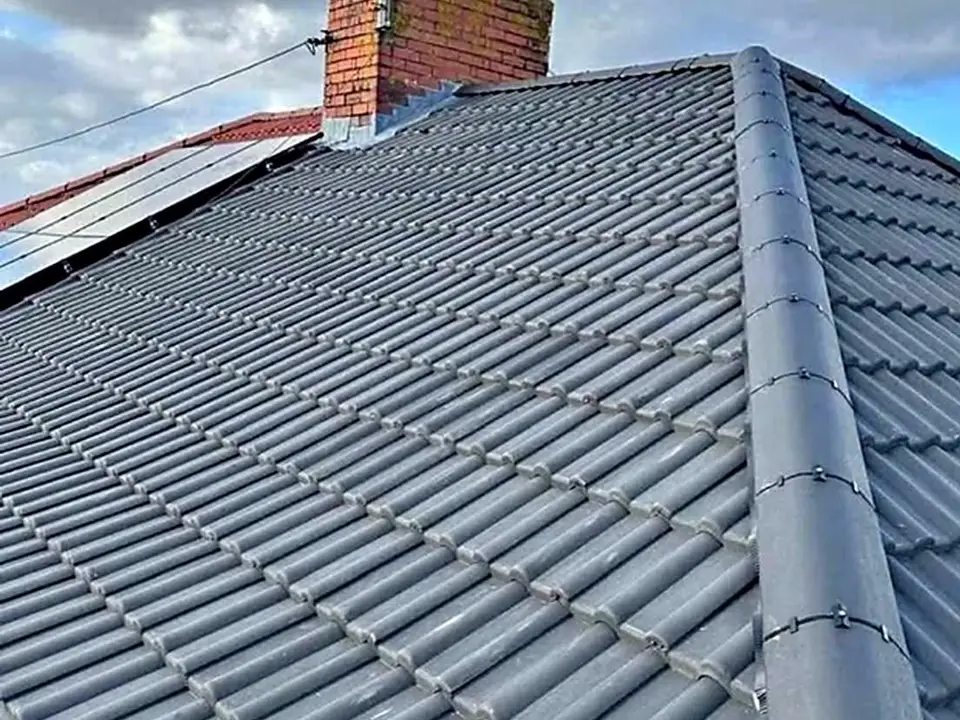
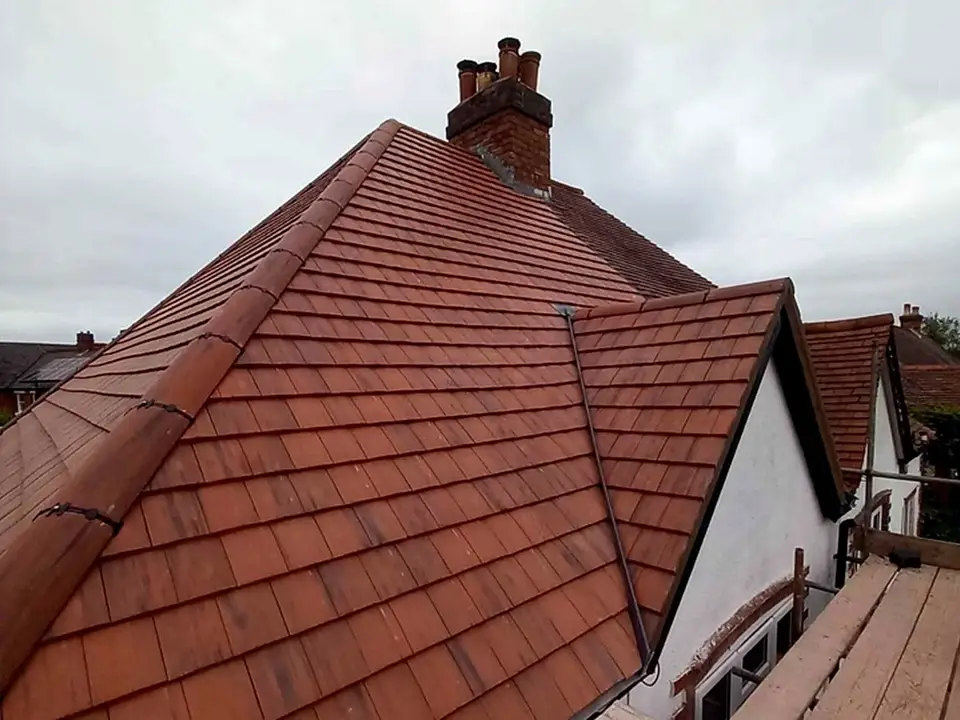
Where the stack comes through the roof, lead flashing keeps the water out. An apron runs across the front of the stack, soakers and step flashings seal the sides, and a back gutter carries water around the top.
Old lead can split, lift or pull out of the brickwork. Some chimneys have no lead at all, just a strip of mortar where the stack meets the tiles, and that cracks as the roof moves. New leadwork is often the proper fix for a chimney leak.
Capping
If a chimney is no longer used, capping the pots stops rain getting in. The cap should still let air through. A flue sealed tight at the top traps moisture, and that shows up as damp on the chimney breast inside. The fireplace or opening at the bottom needs a vent too, so air can move up the flue.
Removal
If a stack isn't needed, or is past saving, taking it down can be the best answer. It's taken down below the roof line, and the roof is tiled over the gap so it's continuous again.
A few things need checking before a chimney comes down:
- If the stack is shared with next door, the Party Wall etc. Act 1996 applies, and your neighbour normally needs formal notice before work starts.
- If the house is listed, removing a chimney needs listed building consent. In a conservation area, check with the council first.
- If chimney breasts have already been taken out inside the house, the stack above needs to be properly supported.
I'll tell you which of these apply to your house when I visit.
When the damp isn't the chimney
Not every damp patch near a chimney comes from the stack. It can come from the roof around it, or from condensation in a sealed flue. I find the cause before suggesting a fix. If it turns out to be the roof, it's covered under roof repairs.
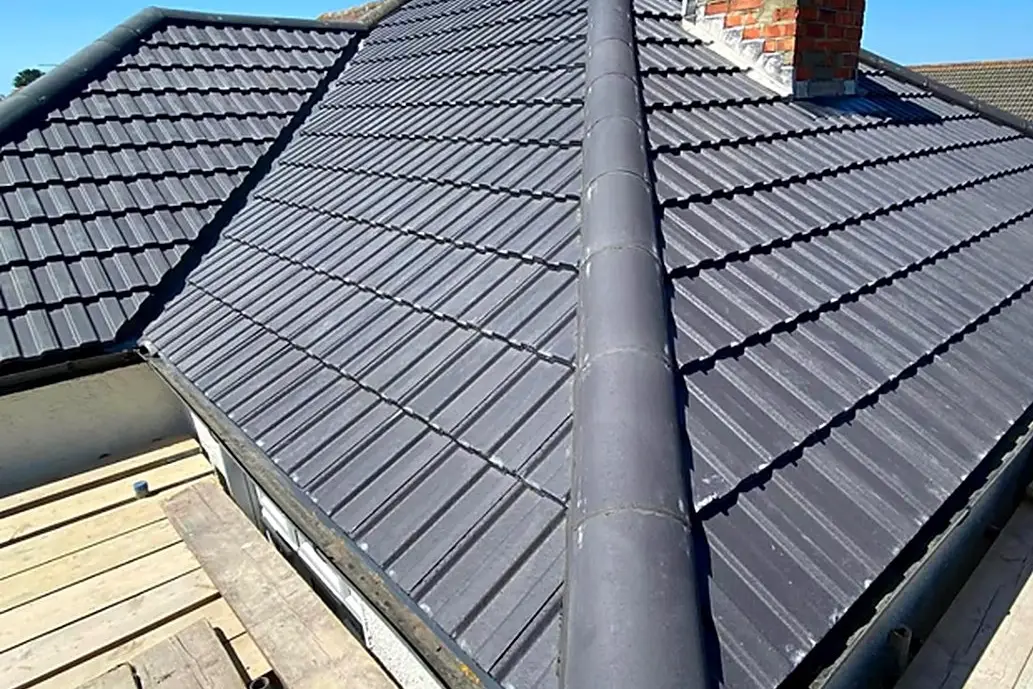
The stack often sits on the ridge, so it's worth checking the ridge tiles at the same time. And if the roof is being replaced, chimney work is best done from the same scaffold, as part of a re-roof.
One person from quote to sign-off
You deal with me throughout. I look at the chimney properly, explain what I've found and put it in writing. The price is fixed before any work starts, and I sign the job off with you when it's done.
Chimney questions
Why is there a damp patch on my chimney breast?
It could be rain getting in through the brickwork, the flaunching or the flashing. It can also be condensation in a flue that has been sealed with no airflow. I'll find the cause and explain it before you decide anything.
Can you take my chimney down?
Yes. Before any work starts, I'll check whether the stack is shared with next door, whether the house is listed or in a conservation area, and how the stack is supported. Then you'll get a written quote.
My chimney is shared with next door. Does that matter?
Yes. A stack shared with next door counts as part of the party wall, so repairing, rebuilding or reducing it comes under the Party Wall etc. Act 1996. That normally means giving your neighbour formal notice at least two months before work starts, unless they agree to it in writing. Either way, it's worth talking to them first.
Do you need scaffolding for chimney work?
Yes. Chimney work needs a safe platform around the stack, and the scaffolding is included in your written quote.
Free written quote, fixed price agreed before any work starts.
Tell me what's going on with your roof. I'll come out, look at it properly and put the price in writing.
I reply to every enquiry within 1 hour, 7am–7pm.