Roofers in Leeds
Leeds is where I'm based. Its houses run from back-to-backs and red-brick terraces to stone villas and big 1930s estates, and each kind of house has its own roof problems. I'll tell you honestly what yours needs.
I reply to every enquiry within 1 hour, 7am–7pm.
Back-to-backs and red-brick terraces
Leeds has the largest remaining collection of back-to-back houses in the UK. A council report in 2008 put the number at around 19,500, with the biggest groups in Harehills, Beeston Hill, Armley, Morley, Burley and Holbeck. Most were built before 1919, but building carried on in Leeds until 1937.
They were built in soft red brick with slate roofs, alongside streets of through terraces in the same materials. Armley alone has about 4,700 back-to-backs and 1,800 through terraces built between 1861 and 1932, according to the council's conservation area appraisal. A lot of those slate roofs are still the originals.
In Harehills, most were built with an attic bedroom lit by a skylight, and dormers have been the most common extension since the 1970s. Chimney stacks sit on the party walls, and many Harehills houses still have timber gutters resting on brick or stone corbels.
Stone villas in the north of the city
Headingley, Chapeltown, Chapel Allerton and Roundhay have larger villas, many in sandstone or gritstone and some in brick. Most have slate roofs, with red tiles on some in Roundhay, and in Chapel Allerton the villas have big stacks carrying several flues. In the older parts of Farsley, Horsforth and Gledhow, some houses still have heavy stone slate.
The 1930s and after
Leeds grew fast between the wars. About one in seven homes in Leeds today was built in the 1930s, a bigger share than across England and Wales, and the council alone built around 20,000 homes between 1919 and 1939, starting with estates like Middleton. More than a quarter of today's homes went up between 1945 and 1972.
Where those roofs are still the originals, they're now well over 50 years old, and many are nearer 90.
What goes wrong with Leeds roofs
- Slipped slates on old terraces. The slate on a 100-year-old roof often has life left in it, but the iron nails holding it rust through. One slipped slate is a repair. Slates slipping all over the roof means the fixings have had their day.
- Shared chimney stacks. With stacks on the party walls, cracked flaunching, open pointing or failed lead can let water into two houses, not one, and repairs mean talking to next door.
- Dormers and skylights. Old skylights and the flashings around dormers are common places for water to get in, and many dormers have small flat roofs that need looking after in their own right.
- Timber gutters. Gutters on corbels rot and leak at the joints. Plastic guttering doesn't fit the corbels easily, so they're usually replaced in timber.
- Tired 1930s and post-war roofs. On an original roof of this age, perished underlay, rotten battens and slipping tiles are the signs that repairs are running out.
The services that matter most here
For the houses Leeds has, these are the three most likely to matter:
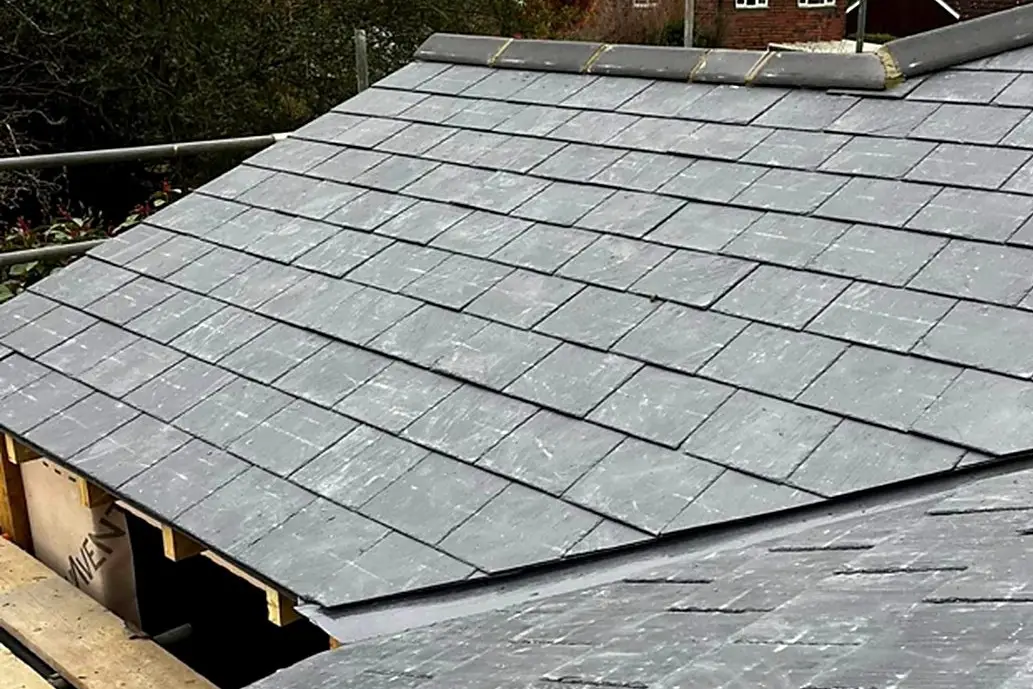
- Slate roofing: refixing slipped slates, valleys and full slate re-roofs for terraces, back-to-backs and villas.
- Chimney repairs: repointing, flaunching and leadwork on stacks shared across the party wall.
- Roof repairs: leaks, dormers, skylights and storm damage.
For a 1930s or post-war house where the whole roof is tired, see re-roofs.
Conservation areas
Leeds has around 80 conservation areas, including Armley, Chapeltown, Chapel Allerton, Headingley Hill and Farsley. In a conservation area, dormers and other roof extensions need planning permission, and so can cladding and some chimneys, flues and solar panels. Several of the council's appraisals ask for slate roofs and chimney stacks to be kept.
Outside conservation areas, the council's householder design guide still expects dormers to be clad in slate or tiles to match the roof, and front dormers are normally refused unless they're already typical of the street. If you're planning a change to your roof, check with Leeds City Council's planning team first.
Covering Leeds
Leeds is my base. I reply to every enquiry within 1 hour, 7am–7pm. I come out, look at the roof properly and explain what I've found, and you get a free written quote with the price fixed before any work starts.
I also cover the towns around the city, including Morley, Rothwell, Garforth and Wetherby. See all the areas I cover.
Leeds roofing questions
My back-to-back still has its original slate roof. Repair or re-roof?
Often the slate itself is still sound and it's the nails that have failed. If a few slates have slipped, refixing them is a repair. If they're slipping across the whole roof, a re-roof with new fixings is the lasting answer. I'll look at it and tell you which, and why.
Can my timber gutters be replaced with plastic?
Sometimes, but not always easily. On many back-to-backs, in Harehills especially, the gutters are timber and sit on brick or stone corbels that plastic guttering doesn't fit well, which is why they're usually replaced in timber. I'll look at how yours are fixed and tell you the options.
I'm in a Leeds conservation area. Can I still re-roof?
Yes. Re-roofing in matching materials doesn't normally need planning permission. Changing the roof covering, adding a dormer or altering a chimney may, and several of the council's appraisals ask for slate roofs and chimneys to be kept. If you're thinking of changing either, check with the council's planning team before any work is booked.
Do you cover all of Leeds?
Leeds is my base, and I cover the city and the towns around it, such as Morley, Rothwell, Garforth and Wetherby. If you're not sure whether you're in the area, call and ask.
Free written quote, fixed price agreed before any work starts.
Tell me what's going on with your roof. I'll come out, look at it properly and put the price in writing.
I reply to every enquiry within 1 hour, 7am–7pm.